


Have you ever felt that communicating with your child – the one you love the most – has become a silent struggle? Do you sometimes feel like you no longer truly understand your child, and as a result, they no longer feel safe opening up to you?
Maybe you’ve only been “hearing” your child, but not truly “understanding” them. That’s the invisible wall standing between you and your child. Would you like to change the way you communicate – to become closer to your child, understand them better, and be someone they trust?
If your answer is “yes,” take a moment to read this article. LeaderInYou will show you a new way to communicate with your child -Empathetic communication.
What Is Empathetic Communication?
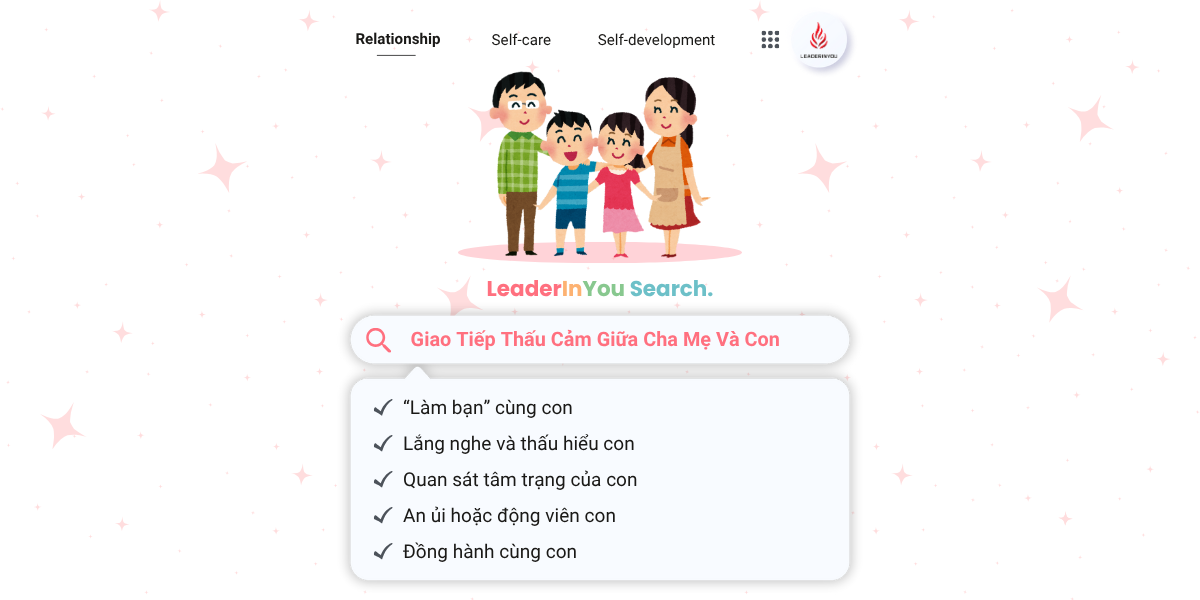
Empathetic communication is the ability to truly listen to someone while also understanding their story with genuine sincerity. It helps the other person feel that they are not only being heard, but also being emotionally connected with – by someone who truly wants to understand them.
Empathetic communication includes four key elements:
- Observation: Look at your child’s behavior with objectivity – whether it’s through the stories they tell or the emotions they show. Avoid judgment or assumptions.
- Feeling: Once you’ve listened to your child, try to put yourself in their shoes to better understand how they’re feeling.
- Need: After understanding your child’s feelings, try to identify what they truly need. What are they longing for?
- Request: Gently offer advice or suggestions that are appropriate and supportive – not commands or demands.
What Happens When Parents and Children Communicate Empathetically?
- For parents: You’ll learn a new way to truly “befriend” your child. The walls that once existed will slowly fade away. Your child will begin to trust you more, feel emotionally safe, and choose to share instead of simply report. Every parent wants to be loved, trusted, and turned to as a safe space – and you’re no different, right?
- For children: They’ll feel your sincerity, understand your intentions, and slowly open up more, building deep trust. Home will become the place they truly want to return to – and you will be their “best friend.” Being able to say “my mom/dad is my best friend” is something every child dreams of showing off to their peers.
How Can You Start Using Empathetic Communication with Your Child?
Step 1: Start by Observing Your Child
- Notice how your child is feeling today – are they happy or upset about something?
- From these simple observations, you can choose the right way to begin a conversation.
Step 2: Gently Open the Conversation
Try starting with soft, open-ended questions like:
- “Is there anything you’d like to talk to me about today?”
- “How was school? Anything new going on?”
- “Take your time with homework. Come have some fruit with us and let’s share our stories.”
This gentle approach helps your child feel safe, valued, and more likely to open up. Try to place yourself in your child’s world – to truly hear and understand the “secrets” tucked away in their little heart.
Step 3: Comfort or Encourage Your Child
Once you understand what your child has gone through, offer comfort and encouragement. To a child, even small problems can feel heavy – and they need your kind words.
- Instead of casually saying, “Just hang in there,” or “Go take a break,” or worse, criticizing them – which might hurt more.
- Try being soft and patient: “I understand how you’re feeling. Would you like to hear my perspective?”, “You’ve been really strong – can I give you a big hug?”
Then gently offer advice using warm, relatable words. After moments like these, your child will truly see you as a reliable source of emotional support. And from receiving this love, they’ll naturally give it back – by sharing openly and trusting you. And that’s what connection is all about.
Final Words
LeaderInYou understands that being a parent is not easy – especially when your child enters adolescence. That’s why, beyond heart-to-heart talks, we encourage you to explore the trends your child is following online. Learn their language. Join their world. And build closeness from there.
No child wants to grow distant from their parents. Often, they’re just scared and unsure if they can place their full trust in you. But once they see your efforts, you’ve already “planted” “a beautiful seed” of trust in their heart.
Don’t give up! Take it slow, and be gentle with your child.


